
Completion requirements
The term adolescence is derived from the Latin word “adolescence’ that means to grow to adulthood. Adolescence begins as a separate developmental stage at about the age 11 and ends at about the age of 22, the adolescence developmental stage can be distinguished based on physical and psychological characteristics and social roles. Adolescence is considered the transitional stage from childhood to adulthood that occurs between ages 13 and 19 (Santrock, 2018). But the physical and psychological changes that take place in adolescence can start earlier, during the preteen years between ages 9 and 12. Stanley Hall (1844-1924) is known as the father of adolescent psychology. He constructed a psychological theory of teenage development, and one major aspect of his theory was that this stage of life is characterized by ‘storm and stress” that most teens are by nature moody and untrustworthy.
The many physical, sexual, cognitive, social, and emotional changes that happen during this time can bring anticipation and anxiety for both adolescence and their families. Understanding what to expect at different stages can promote healthy development throughout adolescence and into early adulthood.
1. Physical development
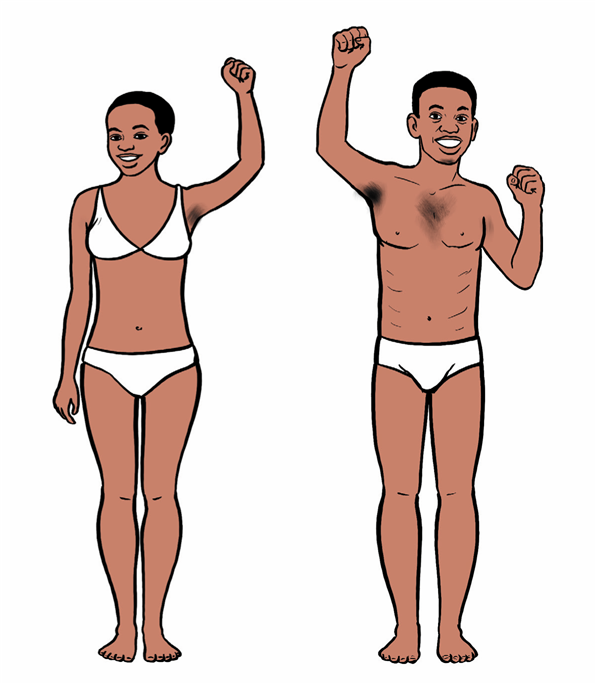
Figure: Adolescents’ Changes
Adolescence starts with puberty, which marks the beginning of significant physical changes. Although the order of these changes is generally consistent, the age at which they begin, and their rate of progression differ widely among individuals. Key developments during puberty include adrenarche and gonadarche, which refer to the maturation of the adrenal glands and the sex glands, respectively. During this stage, both primary and secondary sexual characteristics begin to develop. Primary characteristics involve reproductive organs such as the ovaries and uterus in girls and the testes in boys while secondary characteristics refer to outward physical signs like breast development and wider hips in girls, facial hair growth and deeper voices in boys (Steinberg, 2016).
Girls typically experience menarche the onset of menstruation around the ages of 12 or 13, while boys undergo spermarche, or their first ejaculation, usually between 13 and 14. Both boys and girls go through a rapid growth phase known as a growth spurt. For girls, this usually starts between ages 8 and 13, with adult height reached between 10 and 16. Boys start a bit later, around 10 to 16 years, and usually reach their adult height between 13 and 17. Both genetic factors (nature) and environmental influences (nurture), such as nutrition, medication, or medical conditions, can affect physical growth.
Because the pace of physical development can differ so much among adolescents, puberty often becomes a source of either pride or insecurity. Boys who mature early are generally taller, stronger, and more physically capable than their peers, often gaining social advantages like increased popularity and confidence. However, they may also be more prone to risky behaviors, including substance use and early sexual activity. Girls who mature early might attract attention both negative and positive that makes them feel awkward or self-aware about their changing bodies. This group is more susceptible to mental health issues such as depression, substance use, and eating disorders. On the other hand, teens who mature later than their peers, both boys and girls, may struggle with low self-esteem due to their delayed physical development. This is especially challenging for late-developing boys, who are at a higher risk for depression, parent-child conflicts, and bullying.
Background Colour
Font Face
Font Kerning
Font Size
1
Image Visibility
Letter Spacing
0
Line Height
1.2
Link Highlight
Text Alignment
Text Colour