
Completion requirements
Psychoanalytic theory, developed by Sigmund Freud, explains how unconscious thoughts, feelings, and childhood experiences shape human behavior and personality. It emphasizes the influence of the mind’s unconscious processes, especially those formed during early development.
4. Psychosexual stages of development
According to Freud a person has two basic instincts: sex (life instinct) and aggression (death instinct). The libido is the available energy of sex and is vaguely translated as sexual pleasure. Sexual excitation arises from erogenous zones in the human body (Janetius, 2020). The change in the site of excitation underlies the moment from stage-to-stage development and the task is to achieve sex drive equilibrium.
Sigmund Freud’s psychosexual development can be defined as a harmonious interplay of the individual’s psychological and sexual capacities within an ordered and ethical value system. A person’s psychological growth is conditioned by the libido or the inner energy that is reflected in sexual growth. Also, our personality develops as we move through a series of psychosexual stages. There are five stages of development in all.
a. Oral Stage (0-18 months): Sexual gratification is obtained through oral activities. If a child is not sufficiently nourished, he or she tends fixate their pleasure-seeking energies on particular stage. Fixation may lead to gullibility, smoking, alcohol abuse, nail biting and/or excessive optimism/ pessimism.

Figure: Oral Stage
b. Anal Stage (18 months – 3 years): Sexual gratification is obtained through contraction and relaxation of the muscles that control elimination (Fixation may lead to anal-retentive or anal-expulsive traits). The child either becomes anal expulsive disorganised and often late for appointments, etc. or anal retentive highly controlled, rigid, and compulsively neat.

Figure: Anal Stage
c. Phallic Stage (3 - 6 years): Libidinal energy is shifted to the phallic regions (penis for boys and clitoris for girls). During this stage, boys experience the Oedipus complex while girls experience Electra complex.
• Oedipus complex: A conflict of the phallic stage in which the boy wishes to possess his mother sexually and perceives his father as a
rival.
• Electra complex: Like the Oedipus complex in that a young girl longs for her father and resents her mother.
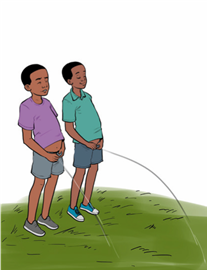
Figure: Phallic stage
d. Latency Stage (6-12 years): The pressures of the Oedipus and Electra complexes cause children to repress their sexual urges and enter a period of latency where their urges remain unconscious.
e. Genital Stage (12-18 years): The mature stage of psychosexual development, characterised by the preferred expression of libido via intercourse with an adult of the opposite gender.
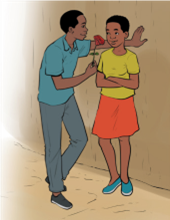
Figure: Genial stage
Table 2: Freud’s psychosexual stages of development
|
Stage |
Age |
Pleasure source |
Conflict/difference |
|
Oral Stage |
Birth to 18 months |
Mouth: sucking, biting, swallowing |
Weaning away from mother’s breast |
|
Anal Stage |
18 months to 3 |
Anus: defecating or retaining feces |
Toilet training |
|
Phallic Stage |
3 to 6 |
Genitals |
Oedipus & Electra Complex |
|
Latency Stage |
6 to 11 |
|
|
|
Genital Stage |
11 to 18 |
Physical sexual changes Reawakening of repressed needs Direct sexual feeling towards others |
Social rules |
Source: Adapted from Janetius, (2020, p.5)
Background Colour
Font Face
Font Kerning
Font Size
1
Image Visibility
Letter Spacing
0
Line Height
1.2
Link Highlight
Text Alignment
Text Colour