
Section outline
-
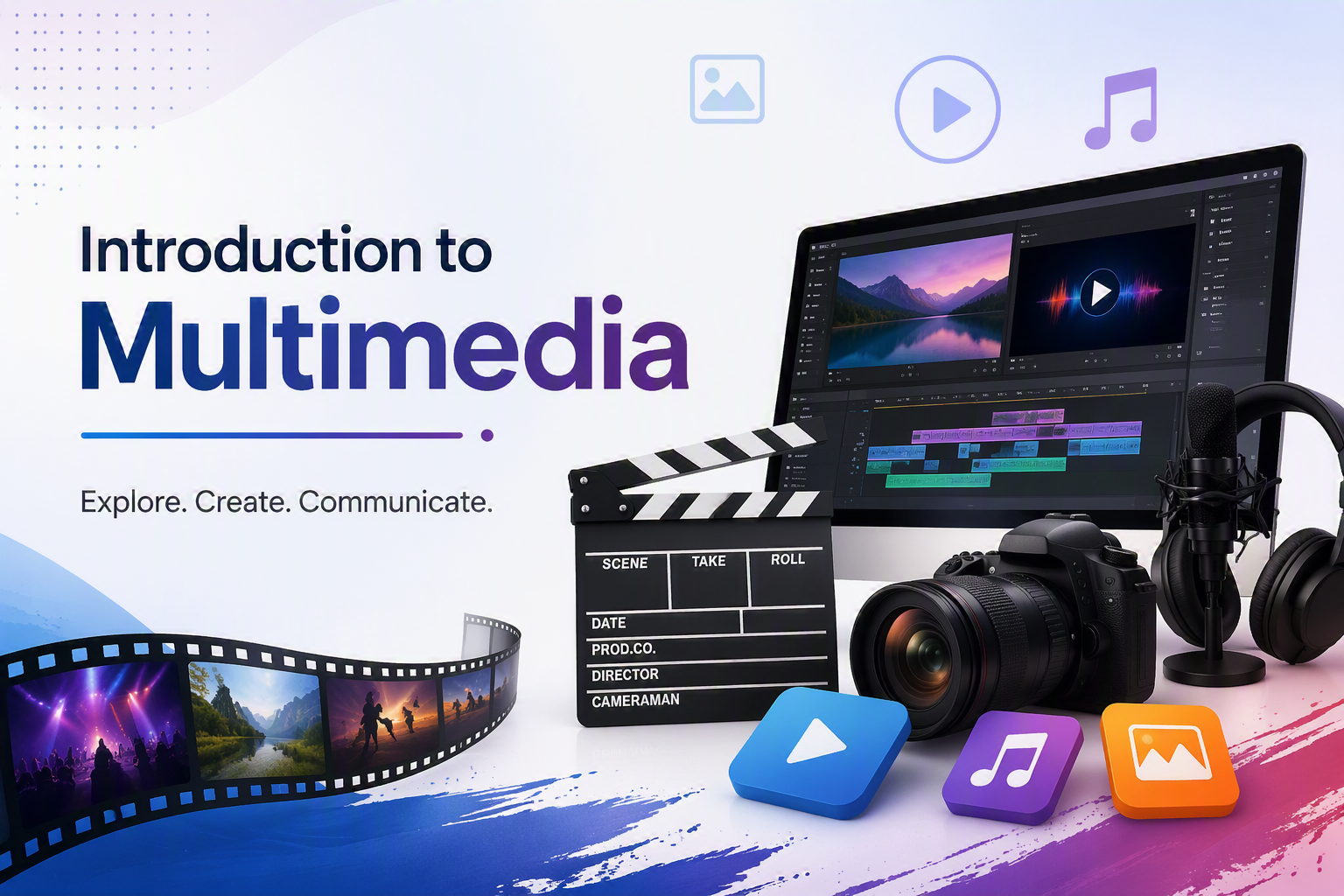
Multimedia plays a vital role in modern life and is widely used across various fields such as education, business, entertainment and social events. With the rapid advancement of computer technology, the demand for multimedia content has grown significantly.
This course provides an introduction to the fundamental concepts of multimedia, including text, images, audio, video, and animation. Learners will explore how these elements are combined to create engaging digital content such as movies, presentations and interactive media.
Students will understand the basic principles of multimedia design and development, as well as its practical applications in real-world contexts.
By the end of this unit, learners will be able to:
1. Define multimedia, including its types, categories, hardware/software requirements, and application areas.
2. Create interactive presentations using hyperlinks and action buttons.
3. Insert audio, video, and CD audio tracks into presentations.
4. Manipulate digital images, audio recordings, and video files using multimedia software tools.
5. Produce edited videos from PowerPoint presentations or Windows Movie Maker.
Facilitators:
1. Emile TWAGIRAYEZU
2. Francine MUJAWAYEZU
3. Prosper HAKIZIMANA -
To build a strong foundation, we must first define the core terms used in content creation. This section clarifies the exact meanings of "digital," "media," and "creation" to show how they connect. Understanding these basic concepts helps you navigate the technical tools and formats used throughout the industry.
-
-
Opened: Sunday, 12 July 2026, 1:48 PMCloses: Tuesday, 12 December 2028, 1:48 PM
-
-
-
Introduction
Multimedia involves creating, editing, storing, and presenting information using text, images, audio, video, and animation. To achieve this, both hardware (physical devices) and software (computer programs) are required. Hardware is used to capture and output media, while software is used to create, edit, and manage multimedia content.
-
Digital media creation shapes how we communicate, learn, and connect in the modern world. This topic explores the essential tools, techniques, and platforms used to produce engaging content like videos, audio, graphics, and interactive websites. By mastering these digital skills, you will transform from a passive consumer of technology into an active, creative content creator.
-
Opened: Sunday, 12 July 2026, 2:29 PMCloses: Wednesday, 12 July 2028, 2:29 PM
-
-
-
Interactive multimedia changes the user experience from passive viewing to active participation by using hyperlinks. These links allow users to control their own path, click through information, and choose what content to engage with next. By connecting text, images, and video, hyperlinks turn linear presentations into dynamic, user-driven digital experiences.
-
Opened: Sunday, 12 July 2026, 2:34 PMCloses: Wednesday, 12 July 2028, 2:34 PM
-
-
-